• kbs Intelligence Announces New Partnership with AutoGrab

    kbs Intelligence Announces New Partnership with AutoGrab

    We are pleased to announce a new partnership with AutoGrab, an automotive intelligence platform providing insurers with on demand vehicle data and insights.

    About the Partnership

    The partnership will give insurers access to relevant vehicle data at the point of assessment, helping claims and fraud teams make faster, more informed decisions in specific fraud-related scenarios, including theft and total loss.

    For insurers, the ability to access timely and accurate external data is becoming increasingly important. Fraud teams need clear, relevant information that supports decision-making without adding unnecessary complexity to existing workflows. By integrating AutoGrab’s data directly into the kbs Intelligence platform, we give insurers seamless access to external data within their existing processes.

    Simon Dudley, Co-founder of kbs Intelligence, said:

    “We’re really pleased to be partnering with AutoGrab. In high-stakes scenarios like theft or total loss, having the right vehicle data at the right time is critical to identifying fraud. This partnership brings that information directly into the kbs Intelligence platform, supporting faster checks, a better user experience, and more confident decision-making for insurers.”

    Ross Perry, Chief Revenue Officer, AutoGrab said:

    “AutoGrab is excited to be partnering with kbs Intelligence. High-stakes moments in claims are exactly where the right vehicle data can support a stronger, faster decision. This partnership shows the real value of getting AutoGrab’s insights directly into the tools that claims teams already use.”

    Supporting Operational Efficiency

    A key benefit of the partnership is the ability to automate data calls for specific fraud scenarios. Rather than relying on manual checks or separate systems, relevant vehicle data can be called automatically when it is needed. This helps reduce administrative effort, supports faster triage, and allows fraud teams to focus their time on the cases that require further investigation.

    This is particularly valuable in areas such as theft and total loss, where access to the right vehicle information can help teams assess claims more effectively.

    Improving the User Experience

    The integration will also improve the user experience by embedding vehicle data directly within the kbs Intelligence fraud platform – no switching between tools or disconnected sources of information. Users can access relevant vehicle intelligence as part of their existing workflow, supporting a cleaner, more efficient process.

    For fraud and claims teams, this helps ensure important information is available where and when it is needed.

    Strengthening Decision-Making

    Access to key vehicle data at the point of assessment plays an important role in improving decision-making capability. By bringing this data into the fraud platform, insurers can gain a more complete view of the claim and the vehicle involved. This helps teams assess risk more effectively, identify areas that may require further review, and make decisions with greater confidence.

    Supporting Smarter Fraud Detection

    This partnership supports kbs Intelligence’s commitment to help insurers make faster, clearer, and more confident decisions across the fraud detection lifecycle. By combining specialist fraud technology with relevant external data, insurers can assess claims more efficiently and make better-informed decisions. Contact us to talk about integrating vehicle data into your fraud workflow

    ,
  • Exploring graph neural networks to strengthen staged accident fraud detection

    Exploring graph neural networks to strengthen staged accident fraud detection

    At kbs Intelligence, we’re always looking at ways to strengthen fraud detection by combining practical experience with emerging technology.

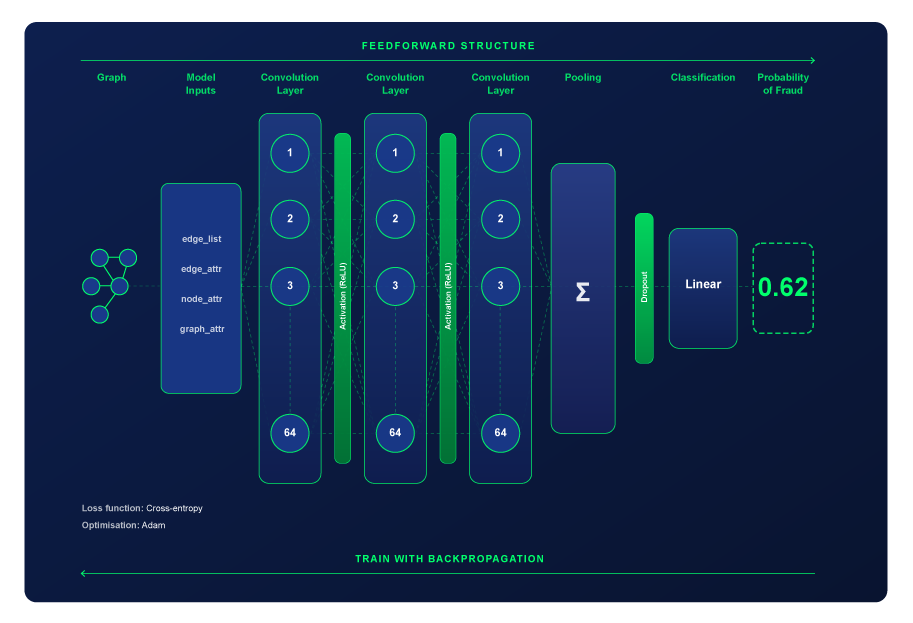
    One recent project involved exploring the use of graph neural networks (GNNs) in staged accident fraud detection. Supported through an Innovate UK-funded R&D project under UK Research and Innovation (UKRI), the work focused on a simple question: could a graph-based approach add value alongside existing fraud detection methods?

    Why Connected Data Matters

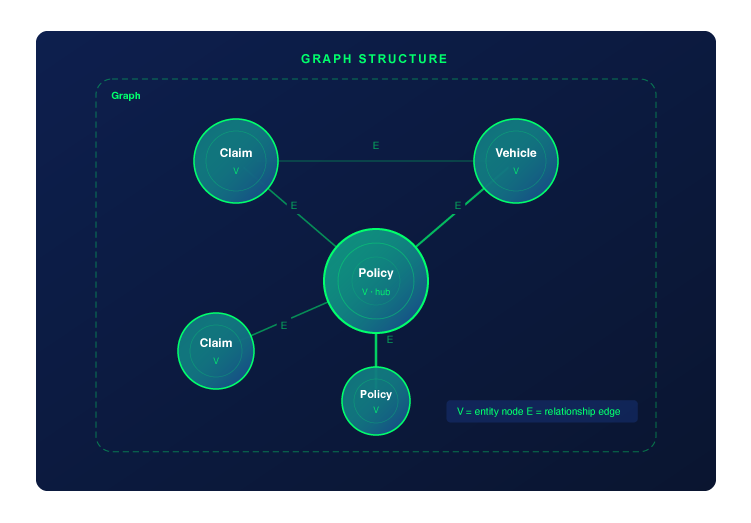
    Fraud rarely exists within a single claim alone. More often, the real insight sits in the relationships around it, between claims, vehicles, policies and other connected entities. When those links are brought together, it becomes easier to build a clearer picture of risk, uncover patterns and identify suspicious behaviour that might otherwise be missed.

    At kbs Intelligence, connected data already plays an important role in how we approach fraud. This project allowed us to take that further by exploring whether GNNs could add another layer of intelligence to our existing fraud detection capability.

    Why Graph Neural Networks?

    Our existing machine learning models are highly effective at identifying suspicious entities and behaviours. What interested us about GNNs was their ability to work directly with graph-structured data, helping them understand not only the characteristics of individual entities but also the relationships between them.

    That distinction is important. In many fraud scenarios, the connections between people, vehicles, policies and claims can be just as valuable as the individual records themselves.

    Rather than looking at isolated data points, graph neural networks are designed to understand the wider context of a network and the way entities interact within it.

    Why Staged Accident Fraud?

    For this proof of concept, we focused on staged motor accident fraud.

    It was a natural place to start because staged accidents often involve interconnected claims, vehicles and policies, creating relationship patterns that can be difficult to assess through traditional approaches alone.

    The hypothesis was straightforward: if a model could better understand those relationships, it might uncover additional fraud indicators and complement our existing staged accident detection capability.

    What We Found

    To test the approach, we created training and testing datasets from 1,003 graphs within our Amazon Neptune graph database. These graphs represented motor insurance claims, vehicles, and policies, with 252 containing positive staged accident outcomes.

    The model was trained to learn both the characteristics of the entities involved and the relationships between them. The results were encouraging. The GNN achieved an AUC score of 0.82, a strong result for a proof-of-concept model. More importantly, 38% of the positive outcomes identified by the GNN had not been detected by our existing staged accident model.

    That finding is particularly significant because the project was never intended to replace existing detection methods. The objective was to explore whether a graph-based approach could add another layer of insight alongside them.

    What This Means For Fraud Teams

    For fraud teams, the value lies in the potential to complement existing detection methods with additional context and insight. The project reinforces something many investigators already know: valuable fraud indicators often sit within networks of connected entities rather than within individual records alone. By understanding those relationships more effectively, graph-based approaches may help uncover suspicious activity that would otherwise be difficult to identify.

    Where This Work Goes Next

    The project has provided a strong proof of concept, a clear use case and encouraging early results. Our focus now is on developing the work further and exploring how graph-based approaches can be applied more broadly across fraud detection use cases. While there is still more work to do, the project has demonstrated the potential of graph neural networks to complement existing fraud detection methods and support stronger identification of suspicious claims.

    The project has been supported through an Innovate UK-funded R&D programme under UK Research and Innovation (UKRI). The funding enabled us to explore an emerging approach to fraud detection in a real-world insurance context, accelerate development of the proof of concept and assess its potential alongside existing detection methods.

  • From validation to escalation: how to spot when evidence needs a second look

    From validation to escalation: how to spot when evidence needs a second look

    Most claims do not require a full fraud investigation. But they do require enough scrutiny to distinguish between evidence that supports a claim and evidence that raises further questions.

    That is where many workflows become difficult in practice.

    Claims teams are often working at pace, with high volumes and incomplete information. In that environment, evidence validation can easily become a tick-box exercise: documents are present, images are attached, invoices have been supplied. But the real question is not whether evidence exists. It is whether that evidence is coherent, proportionate and consistent with the claim being made.

    Validation is not the same as confidence

    A photo, invoice or document may appear credible on first review, but still deserves a second look. The most useful starting point is not the file itself, but the wider claim narrative. Does the evidence fit the timeline? Does it support the stated loss? Does it align with what would normally be expected in a claim of that type?

    In many suspicious cases, the issue is not one obvious red flag. It is a collection of smaller inconsistencies that only become meaningful when viewed together.

    What to look for

    For images, that may mean damage that does not fully match the described incident, missing context, selective angles, or photos that feel disconnected from the time or location of the loss.

    For documents, it may be inconsistencies in names, dates, addresses, formatting or language. A document can look polished and still not sit comfortably within the wider evidence set.

    For invoices, the concern is often around fit and plausibility. Does the supplier information stand up? Are the dates logical? Are the goods or services proportionate to the claim? Do the amounts, descriptions, or formatting feel routine, or constructed for the purpose of supporting the loss?

    None of these issues alone proves fraud. But they can indicate that a claim should move beyond standard validation and into more focused review.

    When validation should become escalation

    The shift from validation to escalation usually happens when the evidence stops feeling internally consistent. That may be because the narrative and supporting material no longer align, because multiple anomalies appear across different evidence types, or because the overall presentation feels unusually curated. In higher-risk cases, it may also be driven by known behavioural or network indicators alongside the evidence itself.

    The point of escalation is not to overreact to minor discrepancies. It is to recognise when a handler no longer has enough confidence to treat the evidence as routine.

    Why this matters

    Fraud controls are most effective when they support real claims workflows rather than sit outside them. If validation is too light, suspicious claims pass through unchecked. If escalation happens too early or too often, genuine claims are delayed and teams lose efficiency. The challenge is finding the point where evidence no longer just needs checking, but needs investigating.

    That is why better evidence review is not simply an administrative step. It is a critical part of smarter triage, better decision-making and more effective fraud detection issues are identified early and escalated appropriately.

    For insurers, the challenge is not just identifying suspicious evidence, but doing so consistently within real claims workflows. kbs Inteliigence helps claims and fraud teams strengthen triage, surface risk earlier, and make better decisions by connecting evidence review with smarter fraud detection and case management.